Expanding or adding a food manufacturing facility or distribution center isn't just about adding square footage; it must be a strategic move that enhances customer service, ensures supply chain continuity, and positions the organization to scale. Opening any new space while achieving those goals is a complex undertaking, but like any initiative in our space, a methodical approach can turn the challenge into a competitive advantage.
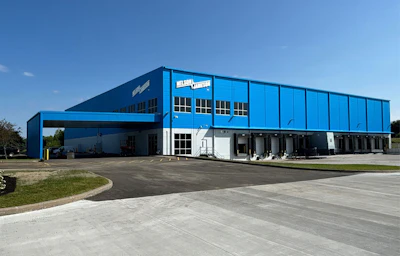
Over the past several years, Nelson-Jameson has gone through this rigorous process, ultimately opening our fifth distribution center in Fairview, PA. As with past distribution center expansions, we learned key lessons in site selection, design, and execution along the way. We’ve drawn on that experience to share our blueprint and process for launching a new facility.
A Data-Driven Approach to Location Strategy
The conversation of expansion almost always begins with location. This decision of "Where should we invest?" must leave the guesswork behind and be rooted in data. Here are the considerations that go into our own geographic decisions.
Analyze your market needs: The primary driver of Nelson-Jameson’s new facility along Interstate 90 in Pennsylvania was the need to better serve our growing customer base. If your current distribution network can be enhanced to provide quicker, more reliable access to products for a key region, it might be time to invest.
Rely on logistics experts: It can be hugely beneficial to engage a third-party consultant to perform a logistical network study. This expert analysis will identify the optimal geographic radius to serve your key customers and suppliers, ensuring your new hub is positioned for maximum efficiency.
Evaluate economic and labor data: Once you have a target area, hire a commercial real estate firm to perform a detailed site selection analysis. This should incorporate not only logistical data but also regional economic and labor studies. Remember, a new location often means building an entirely new workforce, so you need to be confident that you can attract qualified talent.
Consider the environment: Consider your ability to incorporate location-specific environmental elements. For example, in our Fairview facility, we incorporated mechanical cooling to ensure operational resilience during humid summers near Lake Erie.
Define Your Facility Needs and Plan for the Future
With a location identified, the focus shifts to the building itself. Whether you’re upgrading or building from the ground up, the goal is to create a space that meets today's needs while being flexible enough for tomorrow's growth.
Greenfield or brownfield: You might face a choice between a "brownfield" project (upgrading an existing building) and a "greenfield" project (new construction). While the former might seem faster and more cost-effective, be realistic about non-negotiables. If operations require specific features (in our case, high-bay warehousing for vertical racking was needed), you may find that existing inventory is inadequate, making a greenfield project often a necessary long-term investment. Nelson-Jameson was fortunate enough to find a facility with existing high-bay warehousing, but a single feature could be the difference between going greenfield or brownfield, as we did with our Jerome, ID facility.
Create a checklist of requirements: One of Nelson-Jameson’s unique requirements for the Fairview distribution center was an equipment repair center. Developing your own clear checklist of essential features is an important step. Consider specifics such as warehouse height, total square footage, and your own value-added service requirements.
Design for future-proofing: Securing a property with additional acreage for future site expansion is a crucial strategic move that provides long-term flexibility.
Collaborate to Manage the Project Effectively
A successful build requires seamless collaboration between internal teams and external partners from different departments and with different areas of expertise. Collaboration is key from the kick-off to the ribbon-cutting.
Assemble a cross-functional internal team: Create an internal project team with representatives from all key stakeholder groups and functions. This diversity of perspectives is essential to delivering a final design that meets everyone’s expectations.
Leverage collaborative technology: When managing a project from a distance, communication is paramount. Utilize collaborative technologies for file management, project management, and virtual connections to keep all partners aligned and the project on schedule. This is instrumental for navigating the demanding planning stages and addressing unexpected construction issues, like severe weather. During our Fairview construction, the area received over 100 inches of snow, which impacted exterior and site work over the winter.
Maintain discipline: Construction projects rarely go exactly as planned. Be disciplined in maintaining your budget and timeline when unexpected issues arise in the field. Having a local, on-site project manager can be invaluable for providing "eyes and ears" on the ground.
Prioritize the Employee Experience from ‘Day One’
A new facility is more than a building; it's a new workplace. The success of your launch will depend heavily on the team you build – and the talent you attract depends on the experience you’ll provide.
Design for people: From the outset, dedicate significant effort to designing employee welfare spaces. A positive and safe work environment is key to attracting and retaining talent.
Plan your recruitment and onboarding: Launch a local recruitment campaign well before the facility opens. A successful campaign can yield more qualified applicants than available positions.
Invest in training: A well-prepared staff is critical for a smooth start-up. While construction is underway, have new staff travel to your other facilities for comprehensive training and onboarding. This ensures your team is ready to manage inventory and operations successfully from the moment the doors open.
Each approach to opening a facility must be bespoke. But a plan grounded in strategic analysis, future-focused design, and a commitment to people can help ensure any facility project is delivered on time, on budget, and ready to meet the evolving demands of the food manufacturing industry.
Scott Sasse is a VP of strategic initiatives at Nelson-Jameson, a leading distributor in the food processing industry.