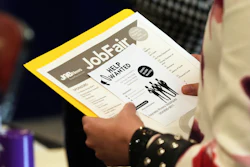
When I leave my Boston condo every day, I say good morning to the concierge, who works for a contracting company providing staff to residential buildings. When I conduct an interview in a nearby building, the people who clean that office at night are contractors. The person who serves me my lunch sandwich is a part-timer with no career prospects in that job.
When my best intentions to eat well are for naught and I gorge on Doritos, I remember that the tasters PepsiCo hires to test the chips' addictiveness are contractors.
These are all examples of what I call "disposable jobs." People who have them work at an employer's site, but their employer makes no commitment to them regarding career prospects or job security. My research shows that employers treat more than 1 in 3 U.S. workers as disposable. That comes to just under 57 million full- or part-time workers out of the nation's workforce of 162 million.
I am a labor economist. In my new book, "Disposable Workers: The Transformation of Employment," I explain why this is happening, what forms it takes, how common it is, what the consequences are for people and for society, and what can be done about it.
3 different varieties
To learn more, I commissioned a nationally representative survey of over 6,000 people in late 2022. I also interviewed nearly 100 workers, employers and policymakers.
I found that there are three categories of disposable workers.
1. Contractors who are employed by a staffing firm but work at a client's site. Examples include temporary office workers, building cleaners and security guards. Many of these people are poorly paid, but some, such as travel nurses, are highly compensated. My survey shows that these contractors account for 13% of the workforce.
2. Freelancers who work for companies, organizations or agencies without being employees. Examples include Uber and Lyft drivers, food delivery drivers, computer programmers and freelance journalists. In my survey, organizational freelancers represent 5% of the workforce. I don't include in this category freelancers who work for individual people, such as most dog-walkers and handymen, because my focus is on how employers treat their employees.
3. Marginal workers who are employed by companies, organizations or agencies. They lack career opportunities, and their jobs have high turnover built in. Marginal workers account for 17% of the workforce in my survey.
Marginal work is important due to its magnitude and because although those jobs look standard, they are designed to be disposable.
Who are marginal workers?
Staff attorneys are quintessential marginal employees. They're hired by law firms as employees, but the central feature of their jobs is that they are not on the promotion ladder to partner. Unlike their career-track counterparts, they have no job security. They are often hired to do the grunt work on a specific case, with the understanding that there is no commitment to keep them on if business lags or the project ends.
Adjunct professors are another good example. This group includes part-timers who teach a small number of courses and full-time contract faculty, but in both cases they lack job security and aren't on track to obtain permanent, tenured, academic jobs.
In 1970 people with tenure or tenure-track jobs constituted 73% of those teaching at colleges and universities. By 2021 only 32% had that status, and the rest were adjunct instructors or contract faculty.
Part-time marginal workers
Another example of marginal work is part-timers.
Employing part-time workers costs less than having full-timers on the payroll. Part-time jobs pay an hourly wage that is nearly 20% below what workers with full-time jobs earn after age, education, occupation and industry are taken into account. When benefits are considered, the gap rises by another 5%.
A second advantage of part-timers from the employer's perspective is higher turnover, which provides an easy path to be able to adjust the size of the workforce and which enables them to avoid investing in career development.
When a team of researchers led by professor Susan Lambert interviewed 88 employers that pay low wages, they found that many use part-time work to make their workforces more "flexible." One manager explained that high churn of part-timers gave the company so much flexibility that they didn't need temp workers.
"Temp workers: We don't need them," he said. "Wait a day for turnover."
Evidence that employers try to maximize the number of people working for them part time instead of full time and with benefits arose after the Affordable Care Act fully took effect in 2014.
The ACA requires that employers with 50 or more employees either provide them with health insurance or pay for them to buy it, but only for people who work 30 or more hours a week. Otherwise they pay, as of 2026, a penalty of US$3,340 per uninsured employee.
Another team of researchers compared trends in part-time work in three low-wage industries – retail, hotels and restaurants, before and after the ACA rolled out. They found that the use of part-timers increased by 500,000 in the years after the Affordable Care Act was implemented. This suggests that companies add to their part-time ranks to save on the health insurance costs of standard employment.
Forces behind this trend
Why do employers want many of their workers to be disposable?
A primary motive is to save money. Employing freelancers and contractors means they can avoid mandatory benefits such as Social Security contributions and, for larger employers, contributing to the cost of health insurance.
Marginal workers, to be sure, do receive these benefits. But the high turnover built into their jobs means that their employers can invest less in their training and avoid the management costs otherwise associated with layoff severance and fair treatment on the job.
An additional motive for many employers is a lack of respect for what front-line employees can contribute. A 2023 report from the McKinsey consulting firm illustrated this tendency when it asserted that 5% of employees deliver 95% of "an organization's value."
This claim, which I believe is inaccurate, still speaks volumes about the attitude of McKinsey and the firms they interviewed regarding the other 95% of workers. They see those employees as disposable.
Less pay and job satisfaction
My survey showed that contractors, freelancers who work for employers and marginal employees all earn less than regular workers do.
In addition, the survey found that contractors and marginal workers are notably less satisfied with their jobs compared with regular workers, whereas freelancers, due to their ability to choose where and when to work, are more satisfied.
The public also pays a price for the use of disposable workers. As examples, researchers have found that hospital infection rates rise when cleaners are contract workers and that the use of contractors leads to a higher rate of industrial accidents.
This article is republished from The Conversation under a Creative Commons license.