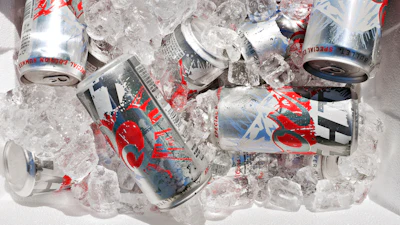
Molson Coors navigated persistent macroeconomic headwinds and supply chain cost pressures in Q3 2026, relying on price increases and premiumization to partially offset declining consumer demand.
Here are some key takeaways from the beermaker’s latest earnings report.
Beer Demand Is Down
Net sales decreased 1.6% to $2.93 billion, driven by a 4.9% decline in global brand volumes amid softer overall beer industry demand, particularly in the U.S. and U.K. markets.
Pricing Power & Premiumization
Favorable price and sales mix positively impacted net sales by 1.8%, driven by net price increases in the Americas and a continued consumer shift toward premium products in EMEA and APAC.
Supply Chain & COGS Pressures
Cost of goods sold (COGS) per hectoliter jumped 8.6% on a reported basis due to persistent inflation across materials, logistics, and manufacturing.
Notably, the company absorbed a $30 million unfavorable hit from Midwest Premium aluminum pricing, which it expects to become a $130 million headwind for the full year.
Strategic Cost Reductions
Marketing, general and administrative (MG&A) expenses fell 7.7%, reflecting targeted marketing cuts and employee-related cost savings tied to its “Horizon 2030” restructuring initiatives (see below).
Lowered 2026 Outlook
Citing ongoing industry volume softness, constrained consumer disposable income and elevated logistics costs, Molson Coors revised its full-year guidance downward, now projecting a 1% to 2% decline in constant-currency net sales.
A Look at the Horizon 2030
CEO Rahul Goyal introduced the company’s "Horizon 2030" strategy in February 2026 to focus on "rewiring" how the company operates and build a leaner, more agile business. Central to this plan is an aggressive corporate restructuring and cost-savings initiative.
The restructuring includes a three-year plan targeting $450 million in cumulative savings by 2028, along with headcount and overhead reductions. The initiatives target structural corporate costs, procurement and capital investments. This aligns with organizational streamlining, which previously included a roughly 9% corporate workforce reduction across the Americas business.