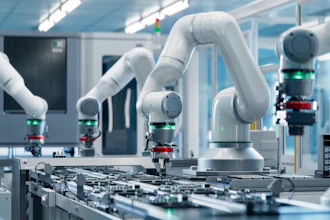
The food and beverage manufacturing sector has undergone some dramatic changes in the past few years. Production lines are no longer siloed mechanical systems, each doing their individual part; they’re connected environments where data flows continuously from one process to the next.
Data now moves constantly between batching systems, quality platforms, environmental monitoring tools, ERP systems, and plant floor equipment. Sensors track temperatures and sanitation cycles in real time. Ingredient movements are monitored down to the second. Quality teams are managing compliance and traceability across multiple plants from centralized systems, often spread across different states or countries.
That visibility has created tangible advantages for manufacturers. Plants are moving faster, managing more product variation, and responding to shifting consumer demand at a speed that would have seemed impossible a decade ago. But the same systems helping manufacturers scale their output are also creating new forms of operational vulnerability.
A problem inside of one connected system rarely stays in that system for long. Whether it’s a cyberattack, a bad data input, or a process failure, the ripple effects move quickly.
The infrastructure in most plants wasn’t designed to withstand the kinds of threats manufacturers are dealing with today. AI-driven attacks and ransomware groups targeting operational environments simply weren’t part of the equation when many of these systems were originally deployed.
Cyberthreats are No Longer an IT Problem
According to IBM X-Force’s 2026 Threat Intelligence Index, manufacturing accounted for more than a quarter of all investigated cyber incidents in 2025, making it the most targeted sector overall. Within that, food and beverage manufacturers have seen a sharp increase in activity. The Food and Agriculture-Information Sharing and Analysis Center (Food and Ag-ISAC) reported that attacks against the sector more than doubled between Q1 2024 and Q1 2025.
The real issue is where these attacks land. They’re not just confined to email systems or office networks sitting on the edge of the business. Increasingly, they hit production environments directly, where operational systems and quality processes meet.
The Dole Foods ransomware attack remains one of the clearest examples of this. Following a ransomware attack in 2023, the company had to notify its customers that it was shutting down its production plants across North America. The attack impacted more than half of its legacy serves and is estimated to have cost the company $10.5 million.
That incident got attention because of the size of the company, but the operational pressure behind it is familiar to a lot of manufacturers. When systems tied to production or quality become unavailable, companies are forced into decisions very quickly.
If controls are disrupted or if the integrity of quality data is called into question, teams aren’t dealing with an IT problem they can isolate and work through over time. Instead, they’re dealing with a situation that can slow or stop production, create uncertainty around product quality, and in some cases force decisions that carry real safety and reputational implications.
The Convergence Conundrum
One of the biggest changes happening inside manufacturing right now is convergence. Environmental monitoring, production controls, audit records, and traceability systems increasingly operate as part of the same connected environment, creating much better visibility across plants, lines and shifts, especially for large manufacturers trying to standardize operations at scale.
But it also means failures can cascade from one process to another. If the integrity of one system is compromised, it becomes much harder to demonstrate process control to auditors or regulators. Add the fact that many manufacturers are already struggling with the sheer volume of information flowing through their operations, and it’s no surprise that some teams become overwhelmed when they’re pushed to figure out what went wrong.
Why Yesterday’s Approach Won’t Work
A lot of manufacturers are still operating with a reactive mindset that made sense when systems were more contained and easier to manage. You run your processes, trust your controls, and when something goes wrong you investigate, fix it, and move on.
But that approach breaks down in a highly connected environment where cybersecurity sits outside core operational and quality workflows, even though it directly affects them. At the same time, the people expected to manage this complexity are under increasing pressure.
Many facilities are balancing an aging workforce that holds deep institutional knowledge with newer employees who are assumed to be digitally fluent but still need to be trained and supported in very real ways. The volume of information involved, from regulatory requirements to production data, is already difficult to navigate. So when cyber risk is layered on top, it exposes the limits of fragmented ownership and after-the-fact problem solving very quickly.
The boundary between physical production and digital systems has now effectively disappeared, and that changes how risk needs to be managed. Cyber incidents now have a direct line into food safety, compliance, and brand trust, which should raise the stakes for every facility.
Treating cybersecurity as part of core operational resilience is no longer optional if manufacturers want to maintain control at scale. The objective is still to produce safe, high-quality products and get them to market efficiently, but the way to achieve that objective has changed because the environment itself has changed.