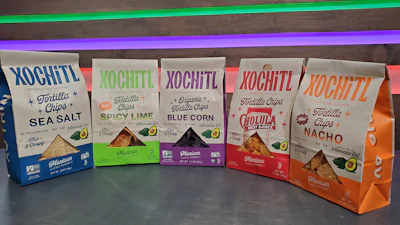
In March, Xochitl (pronounced "so-cheel"), a manufacturer of thin and crispy tortilla chips, announced a brand-wide transition to 100% pure avocado oil. Going forward, the company would cook each flavor, from sea salt to spicy lime, exclusively in avocado oil.
The transition came amid rising consumer demands for savory, "better-for-you" snacking alternatives.
Food Manufacturing recently interviewed Carla O'Brien, chief marketing officer at Xochitl, and Andrew Glanz, VP of operations, about challenges posed by rising costs, where and how the chips are made, and the method behind the madness of creating such flavorful chip dust.
Food Manufacturing (FM): Why the switch to avocado oil?
Carla O'Brien: We made the switch to avocado oil to meet growing demand for better-for-you snacks while staying true to our roots. It's naturally rich in good fats, has a high smoke point, and a clean, neutral flavor that helps preserve the integrity of the corn—delivering a light, crispy chip without a greasy aftertaste. It also fits our approach to simple, thoughtful ingredients and connects back to our Mexican heritage, where avocado is a deeply rooted and symbolic ingredient.
FM: How do you make and ship such thin tortilla chips without suffering issues over food settling or breakage?
O'Brien: Our chips' signature thinness comes from decades of refining small-batch, in-house production, ensuring each chip has a light, crispy texture that still holds up. We combine that with carefully designed packaging—our craft paper bags and packing methods protect the chips in transit, minimizing breakage and settling while keeping that melt-in-your-mouth crunch intact.
FM: How and where are the chips made?
Andrew Glanz: Our tortilla chips are made in Irving, Texas, using an ancient process known as nixtamalization, in which corn is cooked and soaked in a mixture of water and lime. The treated corn is then milled into masa dough, which is sheeted and cut into chips before being cooked to achieve its signature thin and crispy texture.
FM: How much "better for you" are these chips?
O'Brien: "Better-for-you" means using thoughtfully chosen ingredients that elevate the overall snacking experience. By switching to 100% pure avocado oil, we’ve eliminated more heavily processed seed oils and replaced them with a fat source known for its heart-healthy profile and antioxidants. Combined with our simple, high-quality corn base and clean seasoning approach, it’s a meaningful step forward in delivering a more mindful indulgence.
FM: How much will production costs rise with the shift to avocado oil?
O'Brien: Avocado oil is more expensive than other traditional oils. We see that as a worthwhile tradeoff and long-term investment—because it improves the overall quality, delivers a cleaner taste, and aligns with what our consumers are looking for in better-for-you snacks.
FM: Do you foresee any potential supply chain challenges?
O'Brien: Avocado oil can be a bit more variable than other oils, but we planned for that ahead of time. We're working with suppliers to maintain consistency and keep shelves stocked.
FM: Do you use any specific software or technology that is vital to your operations?
Glanz: We utilize a proprietary enterprise system that enables us to conduct operations in a way that maximizes quality and regulatory performance while delivering optimal agility to pursue short and long-term objectives.
FM: What's the method behind the madness for your flavorful chip dust?
O'Brien: Flavor is where we have fun! Each seasoning blend is carefully developed to complement—not overpower—our chips. Every flavor is designed to deliver a vibrant, authentic taste experience. It’s all about creating craveable, well-balanced flavor that keeps you reaching back into the bag.